Domaine Tardieux
As a teenager, Simon Tardieux began working in the vineyards of Clos Roche Blanche, the influential organic domaine run by Catherine Roussel and Didier Barrouillet. After university and a short stint as a social worker, he decided to return to his hometown of Thésée and work in the vines. The only problem was that he didn't have any vineyards of his own. In 2009, Simon teamed up with his neighbor Alain Courtault, whose family had farmed in Thésée since the 1950s. Alain had converted his vineyards to organic farming in 1998, but was still selling most of his harvest to the local cooperative. Together, they began making and bottling their own wines, gradually taking back the fruit as the cooperative contracts expired.
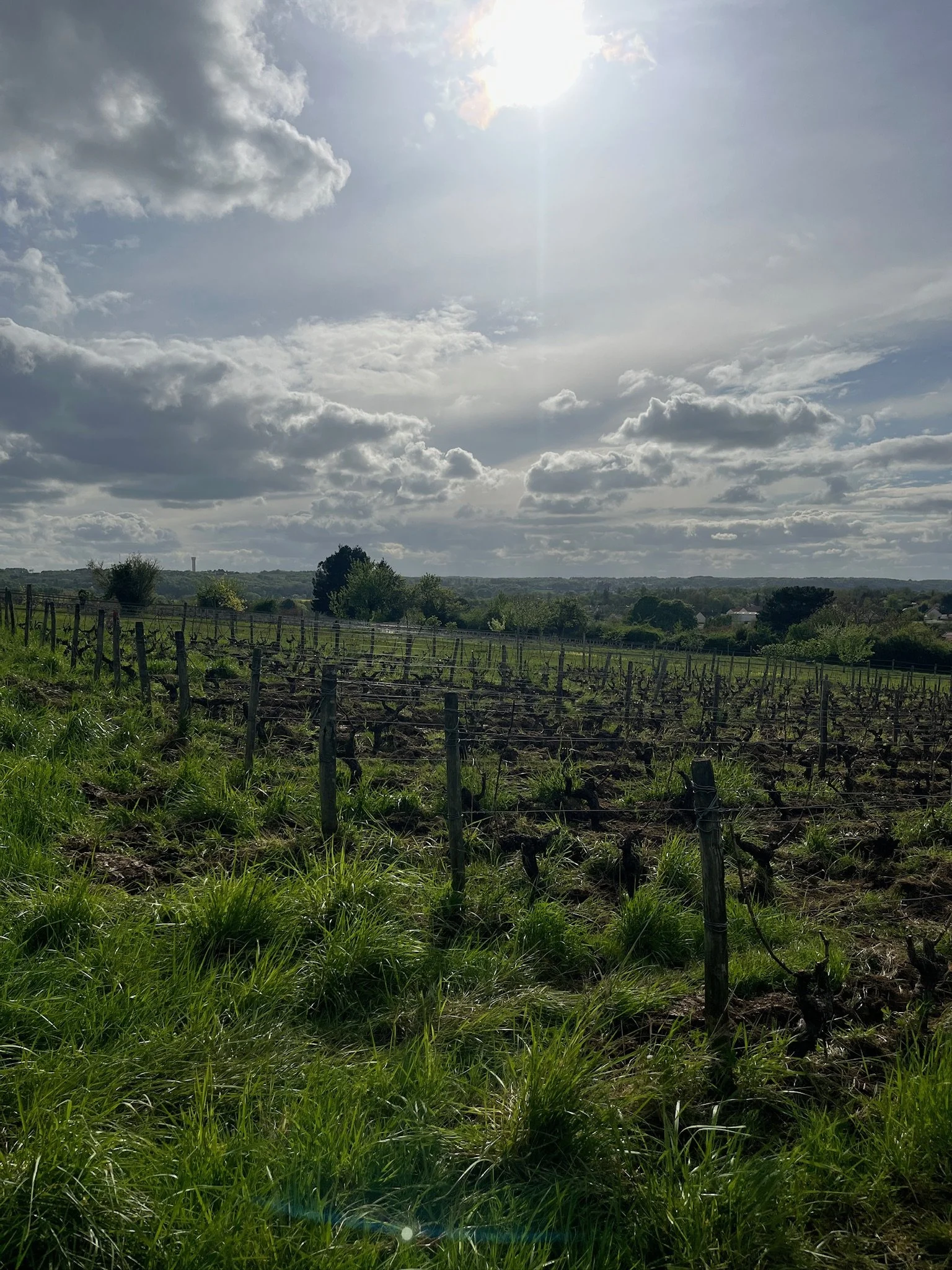
Following Alain's retirement, Simon took over the domaine, having spent more than a decade working alongside him. Today, he farms 15 hectares, all within the village of Thésée, on the right bank of the Cher River. His work goes well beyond the requirements of organic certification. Simon is particularly interested in agriculture paysanne, a French approach to farming that emphasizes small, independent farms, local cooperation, and the long-term health of rural communities. He helps maintain a collective compost pile, organizes local organic wine fairs, and has worked with a photographer to document the year-round labor involved in tending the vineyards.
Thésée is best known for Sauvignon Blanc, which accounts for the largest share of the domaine's vineyards. The vines grow on several distinct soils, from the clay-limestone slopes above the Cher to the white clay and flint of the upper hillsides. Les Sagères comes from the flinty upper slopes, while Les Parcs grows on a cooler, northwest-facing limestone hillside. It would be simpler to blend the fruit, but Simon has always preferred to bottle the two separately. Annual blind tastings at the domaine have reinforced that decision.
The red vineyards are planted to Gamay, Côt (the local name for Malbec), Cabernet Franc, and Pineau d'Aunis. The latter is a temperamental old Loire variety, known for its pale color and distinctive peppery aromas. Historically used for rosé in the region, Pineau d'Aunis can also produce remarkably delicate reds, and Simon makes both. He bottles some of the other varieties individually, while also making blends such as Tradition, which combines Gamay and Côt.
More recently, Simon has also brought back Menu Pineau, an old white grape once common in the Cher Valley but largely abandoned by the late 1960s. He began replanting it in 2019, partly to preserve a local variety and partly because its late ripening and ability to grow with little water make it well suited to increasingly dry summers. It is one example of how Simon continues to rethink the vineyards he inherited while maintaining the farming practices and local relationships that shaped the domaine.